Because breakouts don’t check your birth certificate — and you’re not alone.
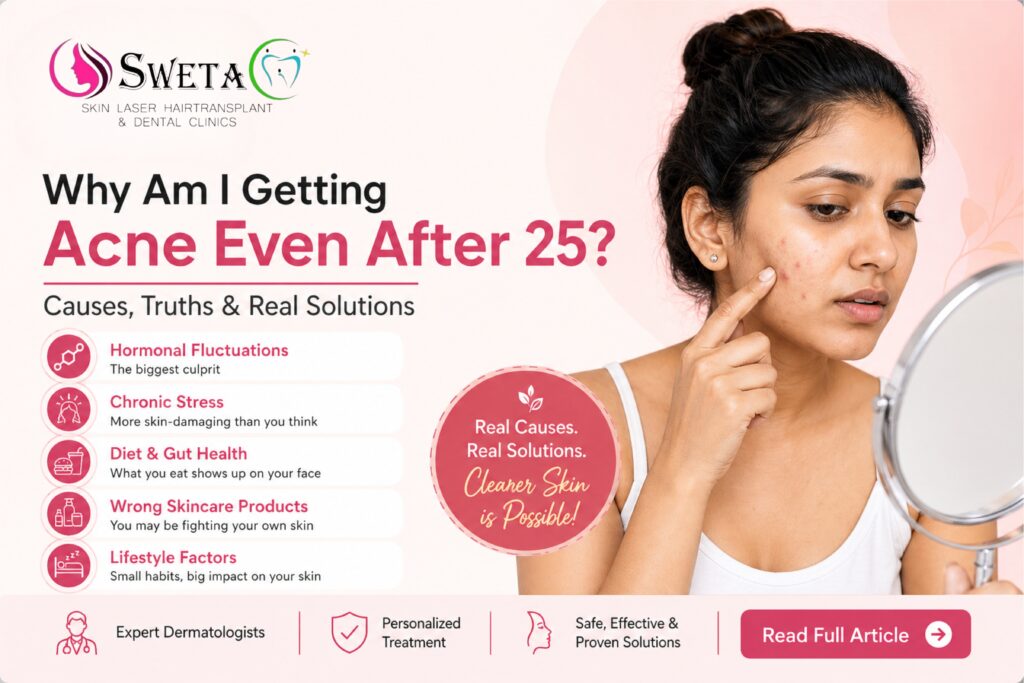
You’re an adult. You’ve got a job, responsibilities, maybe even a skincare shelf that cost you a small fortune. And yet — there it is. A fresh pimple sitting right on your chin like it owns the place.
You probably thought acne was a teenage thing. Something that disappears along with school uniforms and board exam anxiety. But here you are, well past 25, staring at your reflection and wondering what on earth is going on.
First — take a breath. You’re not imagining it, and you’re not doing something horribly wrong. Adult acne is real, it’s common, and it affects far more people than anyone talks about. According to the American Academy of Dermatology (AAD), acne is the most common skin condition in the United States — and a significant number of adults, especially women, continue to experience it well into their 30s, 40s, and sometimes beyond.
So let’s talk about it properly. Not with clinical jargon, not with a long list of products to buy — but with honest, straightforward answers to a question a lot of adults are quietly asking themselves.
First, Understand This: Teenage Acne and Adult Acne Are Different
This is important.
Teenage acne is primarily driven by puberty — a surge in hormones causes the oil glands to go into overdrive, leading to clogged pores, whiteheads, blackheads, and the classic forehead-and-nose breakouts most of us remember.
Adult acne is a different beast. It tends to appear in different locations (lower face, jawline, chin, neck), is often more inflammatory (deeper, more painful cysts rather than surface-level pimples), and is driven by a different — and more complex — set of triggers. The Indian Journal of Dermatology has published multiple studies documenting how adult acne patterns differ significantly from adolescent acne in both location and hormonal drivers — particularly in South Asian women.
This also means that the face washes and benzoyl peroxide gels that worked when you were 17? They may not be the answer now. Adult acne needs a different approach.
Why Does Acne Happen After 25? The Real Reasons
There’s rarely one single cause. Adult acne is usually the result of multiple factors piling up — and identifying your specific triggers is the first real step toward clear skin.
Here are the most common culprits:
1. Hormonal Fluctuations — The Biggest Culprit
Hormones don’t settle down after your teenage years. They continue to shift throughout adulthood — sometimes subtly, sometimes dramatically.
For women especially, hormonal acne is extremely common. It typically flares up:
- Before and during periods — progesterone and androgen levels spike, increasing oil production
- During pregnancy — major hormonal shifts can trigger acne at any point during or after pregnancy
- Around perimenopause — as oestrogen levels drop, androgens become more dominant, causing breakouts
- Due to PCOS (Polycystic Ovary Syndrome) — one of the most common and underdiagnosed causes of adult acne in women
The AAD’s clinical overview of hormonal acne explains that PCOS causes elevated androgen levels that directly overstimulate oil glands — which is why PCOS-related acne rarely responds to regular skincare and requires hormonal evaluation and management.
Where it shows up: Hormonal acne is characteristically located on the lower half of the face — jawline, chin, and sides of the mouth. If that’s where your breakouts consistently appear, hormones are very likely involved.
For men, testosterone fluctuations (from stress, lifestyle, or other medical factors) can also cause or worsen adult acne, though it’s less commonly discussed.
2. Chronic Stress — More Skin-Damaging Than You Think
This is probably the most underestimated cause of adult acne — and ironically, the one that’s hardest to escape in modern life.
When you’re stressed, your body produces a hormone called cortisol. Healthline’s overview of stress and skin explains clearly how cortisol tells your oil glands to produce more sebum, creating the conditions for clogged pores and bacterial proliferation — leading directly to breakouts.
But it doesn’t stop there. Stress also:
- Weakens your skin’s natural barrier, making it more reactive and inflamed
- Disrupts sleep, which slows down skin repair
- Triggers behaviours like touching your face, picking at your skin, or skipping your skincare routine
If you’ve ever noticed that you break out right before an important presentation, during a rough patch at work, or after a difficult personal period — this is exactly why.
The frustrating part? Stressing about your acne creates more cortisol, which creates more acne. It can feel like a loop that’s impossible to exit.
3. Diet and Gut Health — What You Eat Shows Up on Your Face
The connection between diet and acne is real — though it’s not the same for everyone.
Research has consistently linked certain foods to acne flare-ups:
High-glycaemic foods (white bread, sugary drinks, sweets, processed snacks): A study published in the Journal of the Academy of Nutrition and Dietetics found that high-glycaemic diets cause rapid blood sugar spikes, which trigger insulin release, stimulating oil production and inflammation.
Dairy products (especially low-fat milk): Milk contains hormones naturally — and those hormones can interact with your own to stimulate acne. Whey protein supplements (popular among gym-goers) have also been linked to breakouts in multiple studies.
Gut imbalance: Your gut and your skin are in constant communication — this is called the gut-skin axis. Research published on PubMed consistently shows that when your gut microbiome is out of balance — from poor diet, antibiotics, stress, or alcohol — it can trigger inflammation that shows up directly on your skin.
Conversely, foods rich in antioxidants, omega-3 fatty acids, probiotics, and zinc tend to be skin-friendly. Keeping a basic food diary and noticing patterns can be genuinely eye-opening.
4. Wrong Skincare Products — You May Be Fighting Your Own Skin
This one is heartbreaking — because the effort is there, but the products are working against you.
Many adults with acne make these common skincare mistakes:
Using products meant for teenage skin: Harsh, stripping cleansers formulated for oily teenage skin strip the moisture barrier of adult skin — which is often combination, dehydrated, or sensitive — causing it to produce more oil in compensation.
Using comedogenic products: Many moisturisers, foundations, and sunscreens contain ingredients that clog pores. The AAD maintains a resource on comedogenic ingredients to help people identify pore-clogging components in their products. Look for labels that clearly say “non-comedogenic.”
Skipping moisturiser because your skin feels oily: This is a very common mistake. Dehydrated skin produces more oil to compensate. A lightweight, water-based moisturiser is essential — even for acne-prone skin.
Not wearing sunscreen, or using the wrong one: Skipping sunscreen makes acne marks (post-inflammatory hyperpigmentation) darker and slower to fade. If pigmentation from acne marks is a concern alongside your breakouts, our guide on what causes pigmentation on the face explains this connection in depth.
5. Sleep Deprivation — Skimping on Sleep Wrecks Your Skin
Your skin repairs itself while you sleep. Research published by the National Institutes of Health (NIH) confirms that between 10 PM and 2 AM, your body enters its peak repair mode — cell turnover accelerates, collagen is produced, and inflammation is managed.
When you consistently get less than 6–7 hours of quality sleep:
- Cortisol levels rise (there’s that oil trigger again)
- Inflammation increases throughout the body, including in the skin
- Dead skin cells aren’t shed efficiently, leading to clogged pores
- Healing from existing breakouts slows down
For many working adults in their late 20s and 30s — juggling jobs, families, screens, and late nights — sleep is the first thing to get sacrificed. And your skin notices.
6. Environmental and Lifestyle Factors
Pollution: Dust, particulate matter, and pollutants settle on your skin and clog pores. The Central Pollution Control Board (CPCB) regularly records elevated particulate levels in Indian cities — and if you commute daily in a city like Hyderabad, this is a real and daily factor. Double cleansing in the evening (removing sunscreen first, then washing the face) can help.
Humidity and sweat: Sweat itself isn’t bad — it’s when it sits on the skin and mixes with bacteria and dead cells that it becomes a problem. If you’re dealing with acne worsened by Hyderabad’s summer heat, our article on common skin problems in summer covers the seasonal triggers in detail.
Touching your face: According to the Centers for Disease Control and Prevention (CDC), hands are the primary vehicle for bacteria transfer to the face. Every time you rest your chin in your hand or touch your face absentmindedly, you’re transferring bacteria to your pores.
Dirty phone screens: Your phone screen carries more bacteria than most surfaces you’ll touch in a day. Wiping it regularly with an antibacterial wipe matters more than people realise.
Acne mechanica: Constant friction from helmet straps, face masks, or tight clothing can cause a specific type of acne called acne mechanica — triggered by pressure and moisture trapping on specific skin areas.
7. Underlying Health Conditions
Sometimes, persistent adult acne is a symptom of something happening internally.
PCOS (Polycystic Ovary Syndrome): This is one of the most commonly missed causes of jawline and chin acne in women. The Ministry of Health and Family Welfare, India recognises PCOS as a significant public health concern affecting 1 in 5 women in India. Other symptoms include irregular periods, excess hair growth, and weight gain. PCOS-related acne doesn’t respond well to regular skincare and needs hormonal evaluation.
Thyroid imbalances: Both hypothyroidism and hyperthyroidism can affect skin health, causing or worsening acne.
Insulin resistance: Often connected to PCOS, insulin resistance affects hormone levels and directly impacts oil production.
If you’ve been dealing with stubborn adult acne that doesn’t respond to any topical treatments, getting a blood work-up done might reveal something important that’s been missed. Our broader guide on understanding skin issues and their root causes explains why internal health factors are often the missing piece in persistent skin conditions.
Practical Solutions That Actually Work for Adult Acne
Knowing the cause is half the battle. Here’s what you can actually do:
Fix Your Skincare Routine — Keep It Gentle
Morning:
- Gentle, low-pH cleanser (not a harsh foaming one)
- Lightweight, non-comedogenic moisturiser
- Broad-spectrum sunscreen (SPF 30 or higher) — non-negotiable
Evening:
- Oil cleanser or micellar water first (to remove sunscreen and pollutants)
- Gentle face wash second
- Targeted treatment if prescribed (retinoids, azelaic acid, niacinamide)
- Light moisturiser
Ingredients that genuinely help adult acne:
- Niacinamide — reduces oil production, shrinks pores, calms redness
- Salicylic acid (BHA) — unclogs pores; works well in toners or cleansers
- Azelaic acid — treats acne AND reduces pigmentation; great for adults
- Retinoids — the AAD consistently recommends prescription-strength retinoids as one of the most effective acne treatments for adults
- Benzoyl peroxide — use sparingly, only on active spots, not all over
Look at Your Diet Honestly
You don’t need to overhaul your entire diet. Start by noticing patterns. Try reducing high-sugar, high-dairy intake for 3–4 weeks and see if your skin responds.
Add in: leafy greens, nuts (especially walnuts and almonds), fatty fish, berries, probiotic-rich foods like curd, and plenty of water.
Supplements like zinc, omega-3 (fish oil), and Vitamin D have good evidence behind them for acne. The NIH’s Office of Dietary Supplements documents zinc’s role in reducing acne-related inflammation and sebum production. Talk to a doctor before adding new supplements.
Manage Stress — Even Imperfectly
You don’t have to meditate for an hour every day. But some form of regular stress release genuinely matters for your skin. Even 15–20 minutes of physical movement, a short walk, journaling, breathwork, or a hobby that demands your full attention can meaningfully lower cortisol.
Prioritise Sleep
Aim for 7–8 hours. Keep a consistent sleep schedule. Reduce screen exposure an hour before bed. These aren’t just wellness clichés — they have real, measurable effects on skin health backed by the NIH’s sleep research.
Don’t Pick — Seriously
Picking at pimples pushes bacteria deeper, causes post-inflammatory hyperpigmentation (those dark marks that linger for months), and increases the risk of scarring. Apply a hydrocolloid patch over it — it absorbs fluid, reduces inflammation, and creates a physical barrier between your hands and your skin.
When Should You See a Dermatologist?
Home care can improve your skin significantly — but some situations genuinely need professional guidance:
- Acne that’s been going on for more than 3–6 months without improvement
- Deep, painful cystic breakouts that leave marks even after healing
- Acne that keeps coming back in the same places (especially jawline/chin)
- Suspected PCOS or hormonal imbalance — a dermatologist can refer you for the right tests
- Significant scarring or post-acne marks that won’t fade on their own
- Trying multiple products with no results — you may need prescription-strength treatment
A dermatologist will look at the pattern of your breakouts, your medical history, your lifestyle, and give you a targeted treatment plan — whether that’s topical retinoids, hormonal management, chemical peels, laser treatments for marks, or a combination of approaches.
There’s no shame in asking for help. Acne is a medical condition. It doesn’t mean you’re not clean, not healthy, or not taking care of yourself. It means your skin needs something more targeted than the internet can give you.
The Emotional Side of Adult Acne — Let’s Be Honest About This
Nobody talks enough about how much adult acne can affect your confidence and mental health.
When you’re 16 and breaking out, people tell you it’s normal. But when you’re 28 or 35 and still dealing with it, there’s this sense of quiet shame — like you should have figured it out by now.
You avoid mirrors before leaving the house. You cancel plans because of a breakout. You spend money on products that promise the world and deliver nothing. You scroll through social media and wonder why everyone else seems to have effortlessly clear skin (spoiler: filters and lighting are doing a lot of work there).
If any of that resonates — you’re not alone, and it’s okay to acknowledge it. Your skin struggles don’t define you, but they are worth taking seriously. You deserve to feel comfortable in your own skin, and seeking professional help for a medical condition — which is exactly what acne is — is not vanity. It’s self-care.
To Sum It All Up
Adult acne after 25 is real, common, and manageable. It’s driven by a combination of hormones, stress, lifestyle, diet, skincare choices, and sometimes underlying health factors. The good news is that once you understand what’s triggering your specific breakouts, you have real power to address them.
Start simple: clean up your skincare routine, eat a little better, sleep a little more, stress a little less. If that’s not enough — and for many people it isn’t — see a dermatologist who can give you targeted, personalised guidance.
Because clear skin at 28, 35, or 42 isn’t a pipe dream. It just might need a different approach than what worked — or didn’t work — at 16.
If you’re in Hyderabad and looking for professional guidance on adult acne, Sweta Clinics in Kukatpally has a dedicated skin and dermatology team that can help you understand the root cause of your breakouts and create a treatment plan that actually fits your skin and your life.