
Because that “dull” or “patchy” skin you keep trying to fix deserves a real explanation — not just another cream.
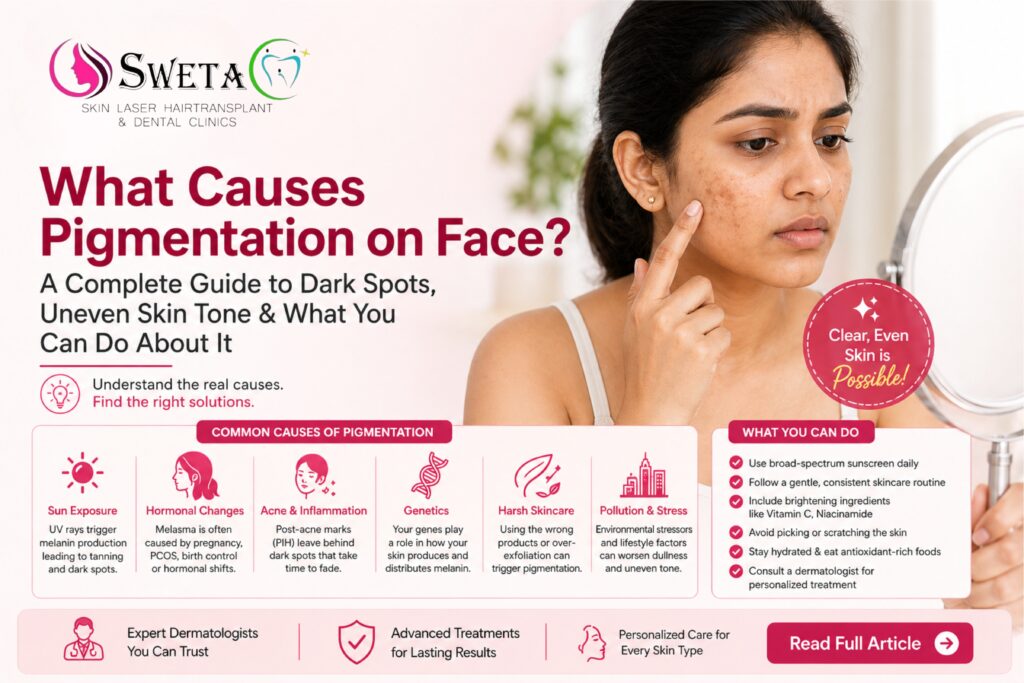
You wash your face twice a day. You use sunscreen (most days). You’ve tried the serums, the face packs, maybe even that expensive brightening kit someone recommended. And yet — those dark spots are still there. The uneven patches. The marks from a pimple that healed months ago but left a reminder behind.
It’s one of the most common and quietly frustrating skin concerns people deal with — especially in India, where the sun is intense, the heat is relentless, and hormonal changes hit hard. Pigmentation affects people of all skin types, all ages, and all genders. And yet, most people treat it with guesswork — layering products without understanding what’s actually causing the darkness in the first place.
That’s what this guide is for.
Not to sell you a routine. Not to overwhelm you with ingredients. But to help you genuinely understand what pigmentation is, why your skin is doing this, and what you can actually do — practically and safely — to address it.
Let’s start from the beginning.
What Is Pigmentation, Exactly?
Your skin gets its colour from a pigment called melanin, produced by specialised cells called melanocytes. The more melanin your skin produces, the darker it appears.
Normally, melanin is distributed evenly — giving you a relatively consistent skin tone. But when melanocytes go into overdrive in certain areas (triggered by sun, hormones, inflammation, or injury), you get concentrated patches of darker skin. That’s pigmentation.
The medical term for this is hyperpigmentation — meaning “more pigment than normal.” According to the American Academy of Dermatology (AAD), hyperpigmentation is one of the most common skin concerns across all skin types globally — and one of the most frequently mismanaged. It’s not a disease. It’s not dangerous. But it can be persistent, frustrating, and for many people, genuinely affects confidence.
Here’s the important thing most people miss: not all pigmentation is the same. Different types have different causes, different appearances, and require different treatment approaches. Using the wrong solution for the wrong type of pigmentation is one of the biggest reasons people spend money without seeing results.
So let’s understand the types first.
Types of Pigmentation on the Face
1. Sun Tan and Sun-Induced Darkening
This is the most straightforward type. When UV rays hit your skin, your body produces extra melanin as a defence mechanism — that’s what a “tan” actually is. Your skin trying to protect itself.
In a city like Hyderabad, where summer temperatures regularly cross 40°C and UV radiation is intense, daily sun exposure adds up fast — even short commutes, a walk to the parking lot, or sitting near a window can contribute. If you’re dealing with summer-related skin problems beyond pigmentation, our guide on common summer skin problems and solutions covers everything you need to know about protecting your skin during peak heat months.
What it looks like:
- Overall darkening of exposed areas (face, neck, arms)
- Usually uniform in tone across an area, not patchy
- May appear more yellow-brown in undertone
Key fact: According to the Skin Cancer Foundation, repeated tanning without protection causes cumulative UV damage that eventually becomes fixed hyperpigmentation — the kind that doesn’t reverse easily without targeted treatment.
2. Melasma — The “Mask of Pregnancy”
Melasma is one of the most common and stubborn types of facial pigmentation, particularly in Indian women.
It appears as large, symmetrical dark patches — usually on the cheeks, forehead, upper lip, and bridge of the nose. It has a distinctive “map-like” or “blotchy” appearance and tends to get significantly worse in sunlight. The AAD’s melasma overview notes that it affects an estimated 5 million people in the US alone — and is significantly more prevalent in South Asian populations due to higher baseline melanin activity.
What triggers melasma:
- Hormonal changes — pregnancy, birth control pills, hormonal therapy
- Sun exposure — UV rays are the #1 trigger for melasma flare-ups
- Genetics — it runs in families
- Heat — not just UV, but infrared heat from sunlight (or even cooking) can worsen it
Melasma is famously difficult to treat because it keeps coming back, especially with sun exposure. It’s the type of pigmentation that most needs professional management — home remedies alone rarely give lasting results.
Who gets it: Predominantly women between 20–45, especially during or after pregnancy. But it can affect men too, and people who take long-term hormonal medications.
3. Post-Inflammatory Hyperpigmentation (PIH) — Acne Marks
This is the dark mark that stays behind after a pimple, rash, or skin injury heals.
When your skin is inflamed — from acne, a cut, a burn, a rash, or even aggressive scratching — it responds to the healing process by overproducing melanin in that area. The inflammation is gone, but the excess melanin stays. If you’re also dealing with frequent breakouts that keep leaving these marks behind, our article on why acne keeps coming back after 25 explains the root causes in detail.
What it looks like:
- Flat, dark spots ranging from pink/red (fresh) to brown/dark brown (older)
- Usually appear where acne or skin injury occurred
- More pronounced in darker skin tones
PIH can take anywhere from a few weeks to over a year to fade on its own, depending on how deep the pigmentation sits in the skin and how much sun exposure occurs during that time.
4. Freckles and Sun Spots (Solar Lentigines)
Freckles are small, concentrated spots of melanin — often genetic, they appear on fair-to-medium skin tones, typically on the nose, cheeks, and shoulders.
Sun spots (also called liver spots or age spots) are flat brown or grey spots that appear with repeated, cumulative sun exposure over years. Unlike freckles, they don’t fade in winter. The Skin Cancer Foundation notes that solar lentigines are a clear sign of cumulative UV damage — and while harmless, they serve as a visible marker that skin protection has been insufficient over time.
Key difference: Freckles are usually present from childhood and are largely genetic. Sun spots develop with age and sun damage.
5. Periorbital Hyperpigmentation — Dark Circles
Most people think of dark circles as a sleep problem. And while sleep does play a role, under-eye pigmentation is often a separate issue — particularly common in South Asian skin.
The skin under the eyes is extremely thin and delicate. According to research published by the National Institutes of Health (NIH), periorbital hyperpigmentation in South Asian populations is frequently caused by genetics and structural factors — not just sleep deprivation — which is why eye cream alone rarely fully resolves it.
6. Age-Related Pigmentation
As we age, our skin’s ability to repair itself and regulate melanin production slows down. Years of sun exposure, hormonal changes, and environmental damage accumulate and show up as uneven skin tone, patches of darkening, and a generally “dull” complexion. This type of pigmentation isn’t something to fix overnight — it’s the result of decades of skin history.
What Actually Causes Pigmentation? Let’s Go Deeper
Now that you know the types, here are the root-level causes — the reasons your skin produces excess melanin in the first place.
Sun Exposure — The #1 Trigger (For Almost All Types)
If there’s one thing every skin expert agrees on, it’s this: sun exposure is the single most common cause of facial pigmentation — and it worsens every type that already exists.
The World Health Organization (WHO) explains that UV-A rays penetrate deep into the skin and directly stimulate melanocytes, while UV-B rays cause surface burns. Both accelerate pigmentation — and both are present even on cloudy days.
The tricky part is that you don’t need to visibly tan for UV damage to accumulate. Sitting near a window, driving, stepping out briefly — all of it adds up daily. And here’s something many people don’t know: heat alone (without UV rays) can trigger melasma. Infrared radiation from sunlight — and even from standing over a hot stove — can stimulate melanin production in people who are prone.
Hormonal Changes
Hormones directly influence melanin production. Oestrogen and progesterone stimulate melanocytes — which is why pigmentation often appears or worsens during pregnancy, with birth control pills or hormonal therapy, across the menstrual cycle, and during perimenopause.
For women, hormonal pigmentation — particularly melasma — can feel impossible to control. But you can control how much you protect your skin from the sun, which remains the single biggest modifier of how severe the pigmentation becomes.
Post-Acne and Skin Inflammation
Every time your skin experiences inflammation — from acne, eczema, a rash, an allergy, or even over-exfoliation — the healing process can leave behind a darkened mark. The more frequently your skin is inflamed, the more post-inflammatory pigmentation you accumulate. This is why people with frequent breakouts often end up with multiple overlapping dark marks that make the face look persistently uneven.
Understanding why acne keeps recurring is key to breaking this cycle — our guide on adult acne causes and solutions explains the hormonal, dietary, and lifestyle triggers in detail.
Skincare Mistakes That Worsen Pigmentation
This is the painful one — because the intention is to help, but some common habits actually make pigmentation worse:
Using lemon juice or lime directly on skin: Research published by the NIH has documented phototoxic reactions — severe worsening of pigmentation — triggered by applying citrus on skin before sun exposure. Many people have made their dark spots significantly darker this way.
Over-exfoliating: Scrubbing daily or using multiple acids at once damages the skin barrier. A damaged barrier leads to inflammation — and inflammation leads to pigmentation.
Skipping sunscreen or using insufficient SPF: Any pigmentation treatment you do — serums, peels, prescription creams — is actively undermined if you’re not blocking UV exposure simultaneously.
Using steroid-containing creams long-term: Many “fairness” creams and local pharmacy recommendations contain hidden steroids. The Central Drugs Standard Control Organisation (CDSCO) has repeatedly warned against over-the-counter steroid-based skin creams in India. Long-term steroid use causes skin thinning, blood vessel visibility, and steroid-induced acne — which then causes more post-inflammatory pigmentation.
Picking at scabs or pimples: Every time you pick, you reopen the wound and restart the inflammation cycle, making the eventual mark darker and deeper.
Lifestyle and Environmental Factors
Pollution: The Central Pollution Control Board (CPCB) regularly records elevated particulate levels in Indian cities — and these particles settle on the skin, trigger oxidative stress, and accelerate pigmentation. Living in a busy urban area significantly increases this exposure.
Poor sleep: During sleep, your skin undergoes repair and regeneration. Research from the NIH confirms that chronically poor sleep impairs skin barrier function and slows cellular repair — leading to accumulated damage and uneven tone over time.
Smoking: Tobacco smoke reduces blood flow to the skin and triggers oxidative damage. The WHO’s tobacco fact sheet documents clearly how smoking accelerates skin ageing and impairs the skin’s natural healing process.
Nutritional deficiencies: Deficiencies in Vitamin C, Vitamin E, B12, and zinc are associated with dull skin and impaired healing — both of which contribute to visible pigmentation. If you’re curious about how internal factors like diet and lifestyle affect your skin more broadly, our article on why skin looks dull despite using good products covers this in depth.
Genetics
Some people are simply more prone to pigmentation than others. Melanocyte activity is partly genetic — which is why hyperpigmentation is more common and more pronounced in people with South Asian, Middle Eastern, and African skin tones. This isn’t a flaw; it’s skin biology. But it does mean that people with deeper skin tones need to be more careful about triggers and more patient with treatment timelines.
How to Tell Which Type of Pigmentation You Have
Not sure what you’re dealing with? Here’s a simple reference:
| Type | Location | Appearance | Common Trigger |
|---|---|---|---|
| Sun tan | Even exposure areas | Uniform darkening | Sunlight |
| Melasma | Cheeks, forehead, upper lip | Large, blotchy, symmetrical | Hormones + sun |
| PIH (post-acne) | Where breakouts occurred | Flat dark spots | Inflammation |
| Sun spots | Nose, cheeks, hands | Small flat brown/grey spots | Cumulative UV |
| Dark circles | Under-eye area | Dark, sometimes bluish | Genetics, allergies |
| Age spots | Face, hands | Irregular flat brown patches | Ageing + UV |
When in doubt — especially with large, symmetrical patches or pigmentation that isn’t responding to anything — getting a professional diagnosis is worth it. Different types respond to different ingredients and treatments.
What Actually Works: Solutions for Facial Pigmentation
Pigmentation is one of the most over-marketed skincare concerns. Here’s what the evidence actually supports:
The Non-Negotiables (Start Here, Always)
1. Sunscreen — Every Single Day No ingredient, serum, or treatment will significantly help your pigmentation if you’re not protecting your skin from UV daily. The AAD recommends broad-spectrum SPF 30 minimum (SPF 50 preferred if you’re outdoors), reapplied every 2–3 hours outdoors. Sunscreen is not optional — it is the foundation of every pigmentation treatment.
2. Sun protection beyond sunscreen Hats, sunglasses, scarves, umbrellas — physical barriers reduce UV exposure meaningfully, especially during peak hours (10 AM–4 PM).
Skincare Ingredients That Genuinely Help
These have real evidence behind them — use them consistently and patiently:
Vitamin C (L-Ascorbic Acid) Inhibits the enzyme that triggers melanin production. Research published on PubMed confirms consistent Vitamin C use produces measurable skin brightening over 12 weeks. Best used in the morning, under sunscreen.
Niacinamide (Vitamin B3) Blocks the transfer of melanin to the skin’s surface. Also reduces inflammation, strengthens the skin barrier, and manages oil production. Very gentle — suitable for sensitive skin.
Alpha Arbutin A gentler, more stable melanin inhibitor. Works well for PIH and overall brightening with less irritation than hydroquinone.
Azelaic Acid Both a treatment for acne and pigmentation. Particularly useful for PIH and melasma. Calming and anti-inflammatory.
Tranexamic Acid Excellent for melasma and stubborn hyperpigmentation. Works through a different mechanism than most brightening ingredients.
Retinoids (Retinol / Tretinoin) Accelerates cell turnover, pushing pigmented cells to the surface. The AAD notes that prescription-strength tretinoin is significantly more effective than over-the-counter retinol for pigmentation. Start slow (2–3 nights a week) and build up.
AHAs (Glycolic Acid, Lactic Acid) Chemical exfoliants that remove the top layer of dead, pigmented cells. Use 1–2 times a week; not suitable for daily use.
Professional Treatments That Go Further
For stubborn, deep, or widespread pigmentation, skincare alone may not be enough:
Chemical Peels — Controlled application of acids that exfoliate the skin at a deeper level than home products. Multiple sessions needed. Effective for PIH, sun damage, and mild melasma.
Laser Toning / Q-switched Nd:YAG Laser — Uses targeted laser energy to break up melanin deposits. Particularly popular for melasma and sun spots. Typically requires 4–6 sessions with maintenance.
Microneedling — Creates controlled micro-injuries that trigger collagen production and allow topical treatments to penetrate more deeply.
Prescription Topicals — A dermatologist can prescribe higher-concentration formulations of tretinoin, hydroquinone (in regulated doses), kojic acid, or combination creams that aren’t available over the counter.
Prevention: How Not to Make Pigmentation Worse
- Sunscreen daily — not just on beach days; on every day you step outside or sit near a window
- Don’t pick at pimples or scabs — every touch risks a mark that takes months to fade
- Avoid harsh DIY remedies — lemon, baking soda, and rough scrubs do more harm than good
- Treat acne promptly — the faster acne resolves, the less post-inflammatory pigmentation it leaves behind
- Eat antioxidant-rich foods — Vitamin C (citrus, bell peppers), Vitamin E (nuts, seeds), zinc (legumes, seeds) support melanin regulation
- Stay hydrated — dehydrated skin makes pigmentation appear more pronounced
- Read labels on brightening products — avoid anything with undisclosed steroids; if a cream promises instant “fairness,” be sceptical
When Should You See a Dermatologist?
Home care can manage mild pigmentation well. But consider consulting a dermatologist if:
- Dark patches are large, spreading, or getting darker despite sun protection
- Melasma keeps returning after treatment — it needs hormonal and medical evaluation
- Post-acne marks aren’t fading after 6+ months of sun protection and topical treatment
- You’ve spent money on multiple products with little to no change
- Pigmentation appeared suddenly without an obvious cause — this warrants investigation
- You want faster, more significant results than topical products can provide
- Your skin is reacting badly to products you’ve tried — your barrier may need professional repair
A qualified dermatologist will diagnose the type accurately, identify the root cause, and build a targeted treatment plan — whether that’s prescription creams, professional peels, laser sessions, or a combination. There’s no award for managing skin problems alone. And the money spent on multiple ineffective products often exceeds what a professional consultation would cost.
The Emotional Weight of Pigmentation — Let’s Acknowledge It
Nobody talks about this part enough.
Dealing with uneven skin tone in a culture that equates “fair skin” with beauty — with generations of fairness cream advertising reinforcing that equation — creates a particular kind of quiet pain. You know, rationally, that your worth isn’t in your skin tone. And yet, standing in front of a mirror, looking at dark patches and marks that won’t budge, carries a weight that is very real.
You’re not vain for wanting clear skin. You’re not shallow for being bothered by dark spots. Caring about it is human.
What matters is approaching it with the right information, realistic expectations, and professional guidance when needed — rather than chasing quick fixes that often make things worse.
Pigmentation takes time to treat. Weeks, sometimes months of consistent care. But it does respond — to the right ingredients, the right protection, and the right professional help.
Final Thoughts
Pigmentation on the face is incredibly common — and incredibly manageable when you understand what’s driving it.
The journey from “why do I have these spots” to genuinely clearer skin usually starts with two simple things: understanding your skin and protecting it from the sun, every day without exception. Everything else builds on that foundation.
If you’ve been trying products without results, or dealing with stubborn patches that simply won’t budge, it’s worth getting a proper evaluation. Your skin has a specific story — and treating it well means understanding that story, not just covering it up.
For those in Hyderabad dealing with persistent pigmentation, melasma, dark spots, or post-acne marks — Sweta Clinics in Kukatpally offers expert dermatological consultations and a range of evidence-based treatments, from chemical peels to laser toning. A proper diagnosis is always the smartest first step.