
You spent a weekend in the sun. A tan is normal, and it should fade in a few weeks. But the dark patches on your cheeks and forehead are still there. Months later, they look even darker.
Here’s a question worth asking honestly: is this really a tan? Many people in Hyderabad treat melasma like a tan. They try fairness creams, lemon, turmeric packs, and whatever a friend recommended. The patches improve a little and then return.
This guide explains melasma vs sun tan in plain words. You’ll learn how to spot the difference, what triggers each one, and why the wrong treatment can make things worse. You’ll also see what a dermatologist can do about it.
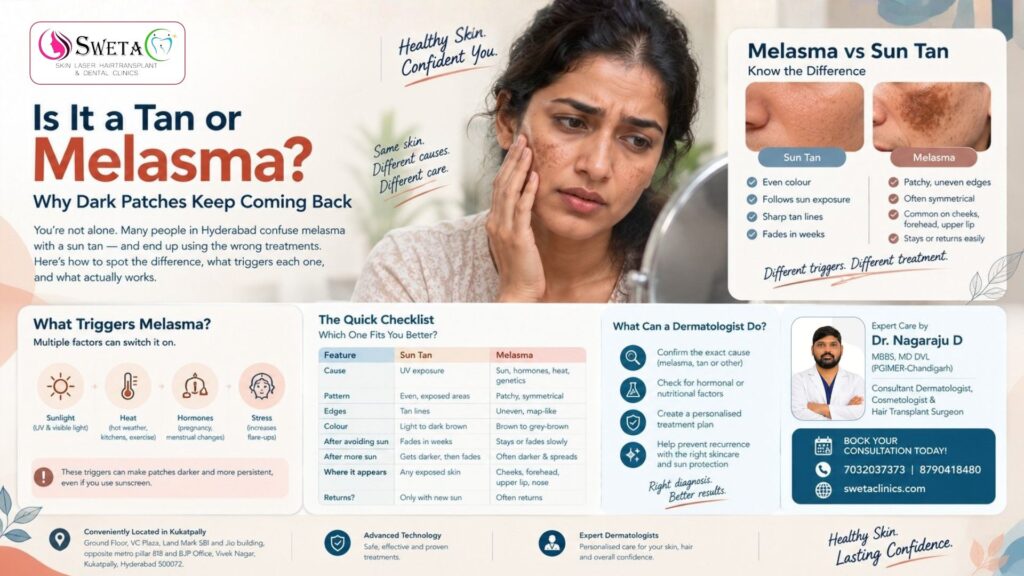
Melasma vs Sun Tan: The Core Difference
A sun tan is your skin’s quick defence against UV rays. Special cells called melanocytes make extra pigment to protect deeper skin layers. Once you stay out of the sun, new skin cells replace the tanned ones. The colour fades.
Melasma is different. It’s a long-term pigment disorder. Melanocytes in the affected areas stay overactive. Sunlight, heat, and hormones keep switching them on. That’s why the patches don’t simply fade when the holiday ends.
Think of it this way. A tan is a short reaction to sun. Melasma is a pattern in the skin that the sun can keep triggering.
What a Sun Tan Looks Like
A tan has a clear link to sun exposure. You can usually point to the day or week it started. The darkening appears on the parts of your body that were exposed. That includes your face, neck, arms, and feet.
Tanned skin usually looks even. The colour is similar across the exposed area. There are sharp lines where clothing, watch straps, or sandals blocked the sun. Tan lines are a classic sign.
A tan also fades. It may take four to eight weeks, depending on your skin and how long you were in the sun. If you protect your skin in the meantime, it keeps getting lighter. That’s the key test. A true tan improves when you avoid the sun.
What Melasma Looks Like
Melasma shows up as flat brown, tan, or grey-brown patches. The edges are often uneven or map-like. It’s usually painless. It doesn’t itch, burn, or peel unless another condition is present.
The most common places are:
- Both cheeks
- The forehead
- The upper lip
- The bridge of the nose
- The chin and jawline
Melasma is typically symmetrical. If you have a patch on your left cheek, you often have a similar one on the right. Less often, it appears on the forearms or neck.
It’s far more common in women. It often begins between the ages of 20 and 45. Men can get it too, and it tends to look the same.
The Quick Checklist: Which One Fits You Better?
Use this table as a starting point. It’s a guide, not a diagnosis.
| Feature | Sun Tan | Melasma |
| Cause | UV exposure | Sun, hormones, heat, genetics |
| Pattern | Even, follows sun-exposed areas | Patchy, often symmetrical on face |
| Edges | Tan lines with clothing marks | Uneven, map-like borders |
| Colour | Light to dark brown | Brown to grey-brown |
| After avoiding sun | Fades over weeks | Stays or fades very slowly |
| After more sun | Gets darker, then fades | Often turns darker and spreads |
| Where it appears | Any exposed skin | Cheeks, forehead, upper lip, nose |
| Returns? | Only with new sun exposure | Often returns, even with little sun |
If your skin matches the right-hand column, a dermatologist should take a look. Don’t wait for it to fade on its own.
The Three Types of Melasma
Melasma isn’t the same in every person. Doctors describe it by how deep the pigment sits in the skin.
Epidermal melasma sits in the top layer. The patches look light to dark brown with sharp borders. This type usually responds better to treatment.
Dermal melasma sits deeper. The patches look grey-brown or bluish, with blurry edges. This type is harder to treat and needs more patience.
Mixed melasma has pigment at both depths. It’s the most common type. Most patients fall into this group.
A dermatologist can often tell the type by looking closely at your skin. Sometimes a special lamp helps. Knowing the type matters because it shapes the treatment plan and sets realistic expectations.
What Triggers Melasma
Several factors work together. Understanding them helps you avoid the ones you can control.
Sunlight. This is the biggest trigger. UV rays switch on pigment cells. Even a short walk in strong sun can darken the patches. Visible light, the kind you see, also plays a role. That’s why a basic sunscreen sometimes isn’t enough.
Heat. Hot kitchens, long bike rides, and hot weather can worsen melasma. Heat alone, without direct sun, may darken patches in some people.
Hormones. Pregnancy is a well-known trigger. Doctors sometimes call it the “mask of pregnancy”. Birth control pills and hormone therapy can also set it off. Thyroid problems have been linked to it too.
Genetics. If your mother or sister has melasma, your chance goes up. Skin type matters too. People with medium to brown skin tones, common across India, get it more often.
Skincare products. Some products irritate the skin. Irritation can bring on or worsen pigment. This includes harsh scrubs, strong peels used at home, and some fragrances.
Stress and lack of sleep. The evidence is less clear here. Many patients still notice flare-ups during stressful periods.
Why Melasma Is So Common in Hyderabad
India’s climate makes melasma a daily challenge. Hyderabad has strong sun for most of the year. The UV index is high even on cloudy days. Summers are hot, and many people commute on two-wheelers with their faces exposed.
Brown skin also produces pigment more actively than lighter skin. That’s a natural protection against UV. It also means the skin reacts strongly to triggers, and pigment tends to stay longer.
Many people in the city work in air-conditioned offices but travel in the sun. Others spend hours near windows or in kitchens. These everyday habits add up.
Why Fairness Creams Often Make It Worse
This is one of the most important points in the article.
Many fairness creams and “pigmentation” creams sold over the counter contain strong ingredients. Some have steroids. Some have high-strength bleaching agents. Others have mercury, which is unsafe and illegal in skincare.
These products may give a quick lightening effect. But the long-term cost can be high:
- Skin thinning and visible blood vessels
- Acne-like breakouts
- Darker patches after stopping the cream (a rebound effect)
- A condition where the skin turns blotchy and darker after bleaching
- Irritation that worsens the original melasma
Home remedies can cause trouble too. Lemon juice is acidic. On skin exposed to sun, it can cause burns and dark marks. Raw ingredients may trigger allergies.
The safest approach is a plan built for your skin, with a doctor watching your progress.
Other Conditions That Look Like Melasma
Not every dark patch is melasma. Some look similar but need different treatment.
Post-inflammatory hyperpigmentation. Dark marks remain after acne, a rash, or an injury. They follow the shape of the old problem.
Freckles and sun spots. These are small, scattered spots. They darken in summer and lighten in winter.
Lichen planus pigmentosus. This causes dark, grey-brown patches, often on the face and neck. It’s fairly common in Indian skin and can be mistaken for melasma.
Ashy dermatosis. This produces ash-grey patches on the face, neck, or body.
Drug-related pigmentation. Some medicines can darken skin. Your doctor needs to know everything you take.
A dermatologist can tell these apart. This is why a proper check matters before you start any treatment.
How Melasma Is Diagnosed
Diagnosis is mostly visual. Your dermatologist looks closely at the patches. They check the pattern, colour, and edges. They may use a magnifying device or a special light to judge the depth.
Expect questions about your health and habits. These may include:
- When the patches first appeared
- Whether you are pregnant or planning pregnancy
- Medicines and hormone treatments you use
- Skincare products you’ve tried
- Your sun exposure and daily routine
- Family history of pigmentation
Blood tests aren’t always needed. In some cases, your doctor may check thyroid levels or other factors. A biopsy is rare and only used when the diagnosis is unclear.
How Melasma Is Treated
There’s no single quick fix. Treatment works in steps, and sun protection comes first.
Step 1: Strict sun protection. Without this, nothing else works well. Daily sunscreen is the foundation of every plan.
Step 2: Prescription creams. Dermatologists may prescribe creams that slow pigment production. Some also speed up skin renewal. These are used for a set time under supervision. Don’t use them on your own, because misuse can cause irritation and rebound darkening.
Step 3: Chemical peels. Mild peels help remove pigmented surface cells. They’re done in clinic, in a series of sessions. The strength is matched to your skin type to avoid irritation.
Step 4: Oral medicines in selected cases. For stubborn melasma, some doctors add oral medicines after checking your medical history. This needs a doctor’s advice. It isn’t suitable for everyone.
Step 5: Laser or light-based treatment. Gentle, low-energy lasers may help some patients. The settings need care. The wrong laser or too much energy can make melasma worse. That’s why experience matters.
Step 6: Maintenance. Melasma is a long-term condition. After the patches improve, you’ll need a simple routine to keep them away. This usually means sunscreen and a light prescription product.
Results take time. Most patients need several weeks to see a visible change. Deeper melasma takes longer. Patience and consistency matter more than any single product.
Sunscreen: The Most Important Step
If you take one thing from this guide, let it be this. Sunscreen is not optional with melasma.
Follow these rules:
- Choose a broad-spectrum sunscreen with SPF 30 or higher.
- Pick a tinted sunscreen with iron oxide if possible. It helps block visible light.
- Apply about a fingertip length for the face and neck.
- Use it every morning, even on cloudy days and indoors near windows.
- Reapply every two to three hours when outside.
- Reapply after sweating or washing your face.
Add physical protection too. A wide-brimmed hat, an umbrella, and sunglasses all help. If you ride a two-wheeler, cover your face with a scarf or helmet visor.
Daily Habits That Help
Small habits protect your results.
Be gentle with your skin. Avoid scrubbing, rough towels, and harsh cleansers. Irritation can darken pigment.
Keep things simple. Use a mild cleanser, a moisturiser, and sunscreen. Add other products only on your dermatologist’s advice.
Avoid waxing and threading on the affected area. Heat and irritation may trigger pigment in some people. Ask your doctor what’s safe for you.
Stay cool. Limit long exposure to hot kitchens and direct heat.
Don’t pick or rub patches. Friction can make them darker.
Track your triggers. Note when your patches worsen. It might follow a long trip, a hormone change, or a new product. Share this with your dermatologist.
Common Myths About Melasma
Myth: Melasma is caused by poor hygiene or a dirty face. It has nothing to do with cleanliness. It’s driven by pigment cells, sun, and hormones.
Myth: It’s only a pregnancy problem. Pregnancy is one trigger. Many people get melasma without ever being pregnant, and men can get it too.
Myth: You only need sunscreen in summer. UV rays reach your skin all year, including monsoon and winter.
Myth: A strong cream will clear it fast. Fast results often come with side effects. Melasma responds best to a steady, supervised plan.
Myth: Once it clears, it’s gone for good. Melasma can return. Maintenance prevents relapse.
When Should You See a Dermatologist?
Book a visit if any of these apply:
- The patches have lasted more than a month or two.
- They get darker with sun, even after you protect your skin.
- You’re not sure whether it’s melasma or something else.
- You’ve used creams that caused burning, thinning, or breakouts.
- The patches are spreading.
- You’re pregnant or planning pregnancy and want safe advice.
Early care is easier than late care. A correct diagnosis also saves money you might spend on products that don’t work.
Getting the Right Diagnosis at Sweta Clinics
At Sweta Clinics in Kukatpally, we examine your skin before suggesting any treatment. We don’t assume based on photos or symptoms alone.
Dr. Nagaraju D (MBBS, MD DVL, PGIMER) leads the evaluation. He has over 10 years of experience with pigmentation concerns. He can tell melasma apart from look-alike conditions. Your plan is then built around your skin type, lifestyle, and goals.
Sweta Clinics is a multi-specialty skin, hair, laser, and dental centre. It’s easily reached from KPHB, Miyapur, Nizampet, Pragathi Nagar, Chandanagar, Madhapur, and Hitech City. You can also see real patient results on our Instagram page. Our YouTube channel shows what treatment looks like before you book.
Frequently Asked Questions
1. What is the main difference between melasma and a sun tan?
A tan is an even darkening that fades once you avoid the sun. Melasma forms patches, usually on both sides of the face, and stays or darkens even with limited sun.
2. Can melasma be cured completely?
It can be controlled well, but it may come back. Regular sunscreen and follow-up care lower the chance of relapse.
3. Does melasma go away after pregnancy?
Sometimes it fades within months after delivery. In other cases it stays and needs treatment.
4. Is melasma harmful or cancerous?
No. It’s a cosmetic concern, not a health risk. But any new or changing dark spot should still be checked by a doctor.
5. Can I treat melasma at home?
Sun protection and gentle skincare at home help a lot. But home remedies and over-the-counter creams often irritate the skin. A dermatologist’s plan is safer and more effective.
6. Can men get melasma?
Yes. It’s less common than in women, but it looks and behaves the same way.
7. How long does melasma treatment take?
Many patients see a visible change within several weeks. Full results depend on the type, depth, and how closely you follow the plan.
8. Can laser treatment cure melasma?
Laser isn’t a cure and isn’t right for everyone. The wrong settings can worsen melasma. It should only be done after a proper evaluation.
9. Does stress cause melasma?
Stress may not cause it directly. Many patients notice flare-ups during stressful periods, so managing stress and sleep helps.
10. Where can I get melasma treated in Kukatpally?
Sweta Clinics offers dermatologist-led diagnosis and treatment for pigmentation. We serve patients across KPHB, Miyapur, Nizampet, and nearby areas.
Don’t Wait for the Patches to Fade
If your “tan” has lasted months, it probably isn’t a tan. Melasma needs the right diagnosis and a steady plan. Waiting only gives the sun more time to darken it.
Sun protection, gentle skincare, and expert guidance can make a real difference. The right treatment depends on your skin, so start with a proper check.
📞 Call us: 7032037373 / 8790418480
🌐 Visit: swetaclinics.com
📍 Location: Ground Floor, VC Plaza, SBI and Jio building, opposite metro pillar 818 and BJP Office, Vivek Nagar, Kukatpally, HYD, 500072