
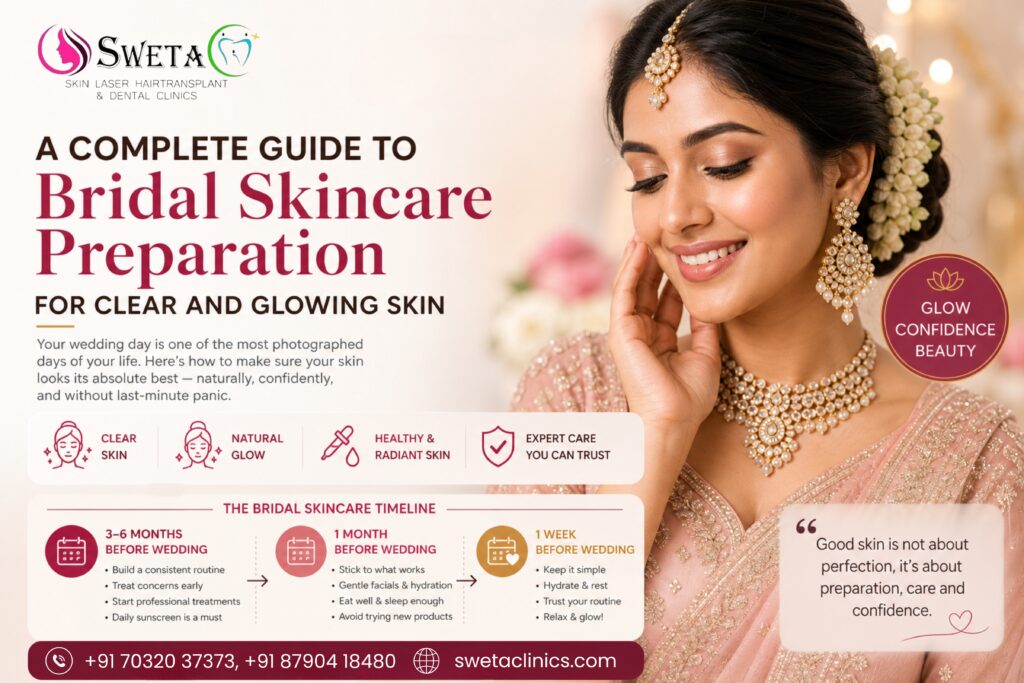
Your wedding day is one of the most photographed days of your life. Here’s how to make sure your skin looks its absolute best — naturally, confidently, and without last-minute panic.
Introduction: The Bridal Glow Is Real — But It Needs a Head Start
Every bride deserves to feel radiant on her wedding day. That soft, luminous glow you see in bridal photos? It rarely happens by accident. It’s the result of weeks — sometimes months — of thoughtful skincare, smart choices, and a little bit of patience.
The truth is, no single facial or product can transform your skin overnight. But with the right preparation starting early enough, you can walk down the aisle with skin that feels healthy, looks even-toned, and genuinely glows — not just from a filter, but from within.
Whether your wedding is six months away or six weeks away, this guide is for you. We’ll walk you through everything: a realistic timeline, common skin concerns, a simple routine to follow, lifestyle habits that truly make a difference, and the mistakes you absolutely want to avoid before the big day.
Let’s begin.
Common Skin Concerns Brides Face (You’re Not Alone)
Before diving into the timeline and routine, let’s talk about what most brides are actually dealing with — because understanding your skin concerns is the first step toward addressing them.
Acne and Breakouts Wedding stress, hormonal changes, and even trying too many new products can trigger unexpected breakouts. According to the American Academy of Dermatology (AAD), stress-induced hormonal fluctuations are one of the most common triggers of adult acne — which is precisely why many brides find their skin acting up in the months leading up to their wedding.
Pigmentation and Dark Spots Sun exposure, old acne marks, and post-inflammatory hyperpigmentation are incredibly common. These dark patches can make skin look uneven and dull, and they tend to become more noticeable under bright event lighting and camera flashes. The AAD explains that most forms of hyperpigmentation require consistent, targeted treatment over several weeks to visibly fade — making early preparation essential.
Dullness and Lack of Radiance Busy schedules, stress, poor sleep, and dehydration can leave skin looking tired and lifeless. Even naturally healthy skin can lose its glow when the body is under sustained pressure.
Uneven Skin Tone Patchiness, redness, or an overall lack of uniformity can be frustrating — especially when you’re trying to achieve that smooth, even base for bridal makeup.
Dryness or Oiliness Some brides struggle with dry, flaky skin that doesn’t hold makeup well. Others deal with excessive oiliness that causes makeup to slide off by evening. Both are manageable — but they need a tailored approach.
Recognizing which concerns apply to you helps you focus your efforts and choose the right steps in your routine.
The Bridal Skincare Timeline: What to Do and When
3–6 Months Before the Wedding: Laying the Foundation
This is the ideal time to start. Your skin needs time to respond to new habits, and this window gives you enough runway to see real results — and course-correct if something doesn’t work.
Start with a skin assessment. Take an honest look at your skin. What are your main concerns? Is your skin dry, oily, combination, or sensitive? Understanding your skin type will guide every product choice you make. The AAD’s skin type guide is a helpful starting point for identifying your skin’s specific needs.
Build a consistent basic routine. At this stage, you don’t need a complicated 12-step regimen. A gentle cleanser, a hydrating moisturiser, and a broad-spectrum sunscreen (SPF 30 or higher) used daily is a solid start. Consistency here matters more than complexity.
Introduce actives slowly. If you want to address pigmentation, acne, or dullness, this is the time to gently introduce ingredients like Vitamin C (for brightening), niacinamide (for even tone and pore appearance), or a mild retinoid (for skin renewal). Research published on PubMed confirms that consistent use of Vitamin C over 12 weeks produces measurable improvements in skin brightness and pigmentation — which is exactly why starting at the 3–6 month mark makes such a difference. Introduce actives one at a time, giving your skin 2–3 weeks to adjust before adding anything new.
Consider a professional consultation. A dermatologist or skin specialist can assess your concerns, recommend appropriate treatments, and guide you on what to use and what to avoid based on your specific skin type. Starting this relationship early gives you time to undergo treatments like chemical peels, laser toning, or targeted facials — with enough gap before the wedding to heal and settle.
Establish sunscreen as a non-negotiable habit. Sunscreen is arguably the most important skincare product you can use. The Skin Cancer Foundation states that daily broad-spectrum sunscreen use not only prevents UV damage but actively protects the results of any brightening or pigmentation treatment you undergo. Apply it every single morning — even on cloudy days, even indoors.
1 Month Before the Wedding: The Refinement Phase
By now, your skin should be responding positively to your routine. This phase is about refining — not experimenting.
Stick to what’s working. This is not the time to try something new because a friend recommended it or you saw a product going viral online. If your routine is giving you results, trust it and continue.
Keep professional treatments gentle. If you’ve been doing facials or mild chemical peels, continue them — but make sure your last significant in-clinic treatment happens at least 3–4 weeks before the wedding. This allows time for any redness or peeling to fully resolve.
Focus on deep hydration. Well-hydrated skin reflects light beautifully and helps makeup apply more smoothly. Use a good hyaluronic acid serum — Healthline’s overview of hyaluronic acid explains how it attracts and retains moisture in the skin, giving it that naturally plump and luminous appearance. Drink at least 8–10 glasses of water daily.
Check in on your diet and sleep. What you eat and how well you sleep become increasingly visible on your skin in this phase. Reduce sugar and processed food if possible, and aim for 7–8 hours of quality sleep every night.
Patch test anything new. If your makeup artist recommends a new primer or base product, try it on a small area of your jawline first and wait 24–48 hours before using it more broadly.
1 Week Before the Wedding: The Final Stretch
You’re almost there. This week is about protecting what you’ve built, not experimenting or trying to fix things at the last minute.
Switch to the gentlest version of your routine. Even if you’ve been using an active ingredient that’s been working well, consider pausing it for the last few days before the wedding. The goal is calm, non-reactive skin on the big day.
No new treatments, no new products — absolutely none. Nothing new on your face this week. No new serums, no fancy masks you haven’t tried before, no extractions, no waxing near the face unless you’ve done it regularly and know your skin handles it well.
Gentle exfoliation — done correctly. If your skin tends to look dull, a very mild exfoliant used 4–5 days before the wedding can add a lovely glow. The AAD recommends gentle chemical exfoliants over physical scrubs for most skin types — but skip exfoliation entirely if your skin is sensitive.
Sleep more, stress less. Dark circles, puffiness, and a dull complexion are directly linked to stress and sleep deprivation. Research from the NIH confirms that even a few nights of quality sleep visibly improves skin tone, reduces inflammation, and supports the skin’s natural repair cycle. Try to delegate tasks and give yourself permission to rest.
Do a hydration mask 2–3 days before. A calming, hydrating sheet mask or gel mask (one you’ve used before and know your skin likes) can give a lovely plump glow going into the final days.
On the wedding day itself — just cleanse gently, moisturise, apply sunscreen, and let your makeup artist take it from there. Your skin is prepped. Trust the process.
Building a Simple and Effective Skincare Routine for Bridal Glow
Here’s a simple framework to follow. Adjust based on your skin type and specific concerns.
Morning Routine:
- Gentle, sulphate-free cleanser
- Vitamin C serum — for brightening and antioxidant protection
- Hydrating moisturiser
- Broad-spectrum sunscreen SPF 30–50
Evening Routine:
- Oil-based cleanser (to remove sunscreen and makeup)
- Gentle face wash
- Active serum — niacinamide, retinol, or a targeted brightening serum
- Nourishing night cream or moisturiser
Weekly additions:
- Gentle chemical exfoliant once or twice a week
- Hydrating mask once a week for radiance boost
Keep the routine predictable. Your skin thrives on consistency — it doesn’t need a new product every week. It needs the same good products, applied correctly, day after day. As the AAD’s skincare guidelines consistently emphasise, a simple routine done reliably always outperforms an elaborate one done inconsistently.
Lifestyle Factors That Affect Your Skin More Than You Think
No skincare product can fully compensate for a lifestyle that’s working against your skin. Here’s what to pay attention to:
Hydration Water is fundamental. Dehydrated skin looks dull, feels tight, and emphasises fine lines. Mayo Clinic’s hydration guidelines recommend consistent water intake throughout the day — not just when you feel thirsty. Aim for 8–10 glasses daily, and more if you’re in a warm climate or physically active.
Sleep While you sleep, your body produces collagen and repairs cellular damage. Research published by the NIH found that poor sleep quality is directly associated with increased signs of skin ageing, reduced barrier function, and a slower recovery from environmental stressors. Think of 7–8 hours as a skincare step you simply cannot skip.
Diet What you eat directly affects how your skin looks and behaves. Foods rich in antioxidants — berries, leafy greens, nuts, seeds — support healthy skin. Omega-3 fatty acids (found in fish, walnuts, and flaxseeds) help maintain the skin barrier and reduce inflammation. A study in the Journal of the Academy of Nutrition and Dietetics found meaningful correlations between high-glycaemic diets and acne severity — cutting back on refined sugar and dairy if you notice these trigger breakouts can make a real difference.
Stress Management Chronic stress elevates cortisol levels, which can increase oil production, trigger breakouts, and slow skin healing. Healthline’s overview of stress and skin explains clearly how sustained cortisol elevation breaks down collagen, increases sebum, and delays healing. Wedding planning is inherently stressful — building small stress-relief habits into your daily routine genuinely reflects on your skin.
Exercise Regular movement increases blood circulation, which delivers oxygen and nutrients to skin cells and gives you that natural flush of colour. Even a 20-minute brisk walk daily counts.
Avoid Smoking and Limit Alcohol Both are well-documented enemies of skin health. The World Health Organization (WHO) confirms that smoking reduces oxygen supply to the skin and significantly accelerates skin ageing. Alcohol dehydrates the skin and can cause puffiness and redness. Reducing or eliminating both in the months before your wedding will make a visible difference.
Things to Avoid Before Your Wedding Day
This section might be the most important in the entire guide. Many brides undo months of good skincare preparation with last-minute mistakes.
Don’t try anything new on your skin close to the wedding. New products — even ones marketed as “gentle” or “natural” — can cause unexpected reactions. The AAD recommends waiting at least 4–6 weeks before introducing any new product to your established routine. The rule of thumb: if you haven’t used it for at least a month, don’t use it now.
Avoid harsh or aggressive treatments in the final 3–4 weeks. Treatments like deep chemical peels, laser procedures, microneedling, or aggressive facials need time to heal. Doing them too close to the wedding risks leaving your skin red, flaky, sensitive, or reactive on your big day.
Don’t pick at your skin. We know it’s tempting. But picking, squeezing, or extracting spots causes inflammation, introduces bacteria, and can leave dark marks that take weeks to fade. Apply a hydrocolloid patch and leave it alone.
Skip the DIY skincare experiments. Unverified home remedies — raw lemon juice, baking soda masks, undiluted essential oils — can disrupt your skin’s pH balance, cause chemical burns, or trigger allergic reactions. Research published by the NIH has documented phototoxic skin reactions from applying citrus directly to skin before sun exposure. Stick to what’s proven and what your skin already knows.
Don’t crash-diet or drastically change your eating habits. Crash diets can cause vitamin and mineral deficiencies that show up on your skin as dullness, hair loss, or breakouts. If you want to eat healthier, make gradual, sustainable changes.
Avoid excessive sun exposure without protection. If you’re attending outdoor events, pre-wedding functions, or beach trips, protect your skin diligently. New tan lines, sunburns, or worsening pigmentation can undo months of careful effort.
When Should You Consider Professional Skincare Guidance?
Home routines are powerful — but they have limits. There are certain situations where consulting a qualified dermatologist or skin specialist makes a real difference:
- If you have persistent acne that doesn’t respond to over-the-counter products, a professional can prescribe targeted treatments that work faster and more safely
- If you’re dealing with significant pigmentation — from sun damage, melasma, or old acne scars — professional treatments like chemical peels, laser toning, or prescription brightening agents can deliver results that topical products alone cannot
- If your skin is sensitive or reactive and you’re unsure which products are safe, a professional skin assessment removes the guesswork and prevents harmful trial-and-error
- If you want a structured, personalised plan tailored to your skin type, concerns, and wedding timeline — a bridal skin consultation gives you clarity so you’re not navigating skincare overwhelm alone
The key is to start early enough that any treatments have time to work and settle. Ideally, begin professional consultations at least 3–4 months before your wedding.
In Hyderabad, Sweta Clinics in Kukatpally offers dedicated bridal skin consultations — combining advanced treatments with personalised guidance to help brides achieve real, lasting results that no last-minute facial can replicate.
Final Tips to Carry With You
- Start early, start simple. A basic routine done consistently for months outperforms an elaborate routine done for two weeks
- Introduce one thing at a time. Give your skin time to adjust before adding anything new
- Sunscreen every single day. No exceptions — the Skin Cancer Foundation cannot stress this enough
- Listen to your skin. If something is causing irritation or breakouts, stop using it
- Manage your expectations. Real results come from consistent care over time — but they do come
- Take care of your whole self. Sleep, water, food, and stress management are skincare too
- Don’t forget your neck and décolletage. With bridal outfits often featuring necklines, this area deserves the same care as your face — extend your moisturiser and sunscreen downward
- Have a wedding-day kit ready. Blotting paper, a small hydrating mist, and your SPF for touch-ups between events can be lifesavers
Closing Thoughts: You Deserve to Feel Beautiful in Your Own Skin
Your wedding day is a celebration of love — and you deserve to feel fully yourself, glowing from the inside out. The goal of bridal skincare isn’t to look like someone else. It’s to help your skin be its healthiest, most radiant version of itself.
The tips in this guide are practical, safe, and rooted in what actually works. Start where you are, be consistent, and be patient with your skin — and yourself.
If at any point you feel unsure, overwhelmed, or want a more personalised plan, don’t hesitate to reach out to a skin specialist. A good consultation early on can save you months of confusion and trial-and-error.
Here’s to your happiest, most glowing chapter yet.
Looking for professional bridal skincare guidance in Hyderabad? Sweta Clinics, located in Kukatpally, offers personalised skin consultations, advanced laser treatments, and expert care to help brides achieve their best skin before their wedding day. Book a consultation and start your bridal skin journey with confidence.