Dull skin. Stubborn dark spots. Patches that never quite matched the rest of your face. At some point, the search starts: “best laser skin treatment near me,” “skin whitening doctor near me,” “pigmentation removal clinic near me.”
Laser treatments have genuinely changed what’s possible for pigmentation, uneven tone, and skin texture. But not every laser suits every skin type, and this matters more than most clinics tell you upfront, especially for Indian skin tones.
This guide covers what laser skin treatment actually involves, which type suits which concern, and what to check before choosing a clinic in Kukatpally, KPHB, or Hyderabad more broadly.
What Laser Skin Treatment Actually Does
The Basic Idea
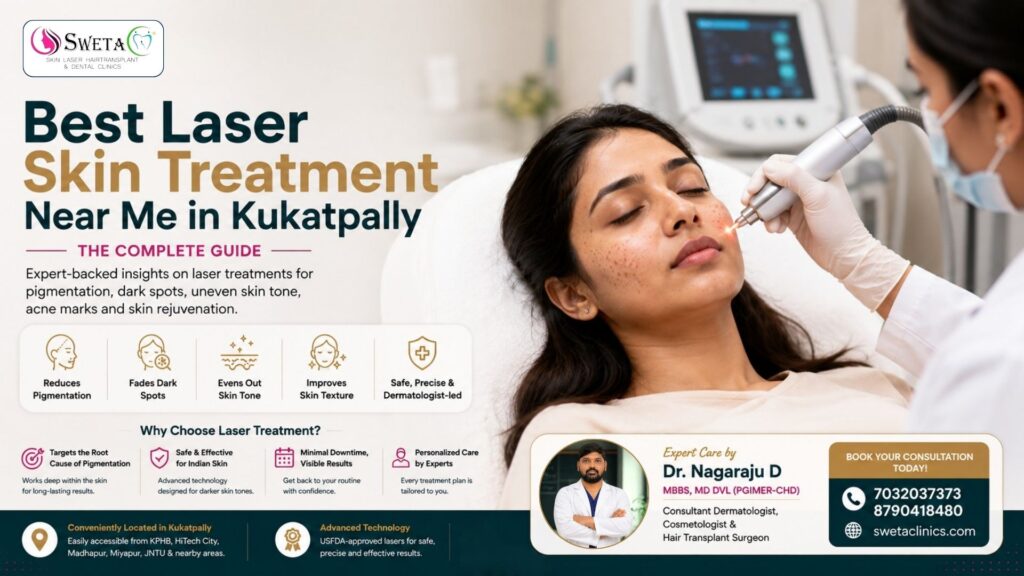
Laser treatment uses focused beams of light to target specific layers of skin. Depending on the wavelength and settings, it can break down excess pigment, resurface damaged skin, or stimulate collagen production underneath.
According to Cleveland Clinic, laser resurfacing works by removing skin very precisely, layer by layer, which is what allows it to even out pigmentation and improve texture at the same time.
What It Can Treat
Laser treatment commonly addresses uneven pigmentation, sun damage, age spots, acne scars, fine lines, enlarged pores, and dull or uneven skin tone. Johns Hopkins Medicine notes it’s also used for tattoo and hair removal, alongside general skin rejuvenation.
Why It’s Not One-Size-Fits-All
This is the part most people don’t realise until they’re already in a chair. Different lasers work differently, and the wrong one on the wrong skin type can cause more pigmentation than it removes, not less.
Which Laser Treatment Is Best for Skin?
There’s no single “best” laser. The right one depends entirely on what you’re treating and your skin type.
For Pigmentation and Dark Spots
Q-switched Nd:YAG lasers are widely used for pigmentation, especially in darker skin, since they penetrate deeper while being less absorbed by melanin in the upper skin layers, making them a safer choice for Indian skin tones.
For Fine Lines and Texture
Fractional lasers and CO2 resurfacing address deeper concerns like fine lines and acne scarring, working by creating controlled, precise injury that prompts the skin to heal with improved texture and firmer collagen underneath.
For Overall Tone and Dullness
Photofacial or IPL treatments target overall skin tone, redness, and mild pigmentation, and are generally gentler than resurfacing lasers, making them a good starting point for people newer to laser treatment.
For Melasma and Stubborn Pigmentation
Low-influence Q-switched Nd:YAG lasers and pico lasers have been specifically adapted for skin of color, delivering less energy while still targeting deep pigmentation without heavy surface damage.
A dermatologist matches the laser type to your specific skin concern and Fitzpatrick skin type, rather than defaulting to whatever equipment happens to be available.
Can Laser Remove Dark Spots Permanently?
This is one of the most common questions we hear, and the honest answer is: it depends on what’s causing the dark spots.
When Results Tend to Be Permanent
Dark spots from accumulated sun damage or age spots tend to respond most permanently to laser treatment, since they’re caused by a fixed amount of existing pigment rather than an ongoing biological process.
When Results Need Maintenance
Melasma and hormonally-driven pigmentation behave differently. These can respond well to laser treatment, but they’re also more likely to recur, especially with sun exposure, hormonal changes, or inadequate aftercare.
Why Aftercare Matters So Much
Sun protection after treatment isn’t optional. Since laser-treated skin is more vulnerable to new pigmentation forming, skipping sunscreen can undo weeks of progress, regardless of how effective the initial treatment was.
Why Skin Type Matters for Laser Safety
The Risk for Darker Skin
The American Academy of Dermatology is direct about this: darker skin is more prone to burns and dark marks after laser treatments, and patients should work with a dermatologist experienced in treating darker skin specifically.
What Can Go Wrong With the Wrong Laser
Using a laser designed for lighter skin on darker skin can cause post-inflammatory hyperpigmentation, meaning the treatment itself creates new dark marks instead of removing existing ones. This is one of the most common complaints from clinics that don’t screen for skin type properly.
Why This Matters More in Hyderabad Than Some Places
Most patients in Kukatpally and across Hyderabad fall into medium-to-darker Fitzpatrick skin types. That makes laser selection and dermatologist experience genuinely more important here than in markets where lighter skin types are more common.
Common Laser Skin Treatment Myths
“All Lasers Work the Same Way”
They don’t. A laser suited for hair removal isn’t the same as one suited for pigmentation, and using the wrong type for your concern can waste money or worsen the issue.
“Laser Treatment Guarantees Permanent Whitening”
Laser treats existing pigmentation and improves tone, but it doesn’t permanently change your natural skin color. Anyone promising complete, permanent “whitening” beyond correcting pigmentation issues isn’t being fully honest about what lasers can do.
“More Sessions Always Means Better Results”
Overdoing laser sessions, especially on darker skin, increases the risk of irritation and rebound pigmentation. A proper protocol spaces sessions appropriately rather than rushing through as many as possible.
“Spa and Salon Lasers Are Just as Good as Clinical Ones”
Laser results depend heavily on the skill of whoever is performing the treatment. Non-medical settings often have limited training and weaker equipment, which raises the risk of burns, scarring, or uneven results.
How to Choose the Best Skin Laser Clinic Near You
Board-Certified Dermatologist, Not Just a Technician
A dermatologist can assess your specific skin type and concern before recommending a laser, rather than applying a generic protocol to every patient who walks in.
Experience With Darker Skin Types Specifically
Given how much this affects safety and results, ask directly about the provider’s experience treating pigmentation and laser procedures on Indian or South Asian skin.
US-FDA Approved Equipment
Proper, well-maintained equipment matters as much as the practitioner’s skill. Ask what devices are used and whether they’re approved for the specific concern you’re treating.
A Proper Consultation Before Treatment
A trustworthy clinic examines your skin, discusses your Fitzpatrick type, and sets realistic expectations before recommending a treatment plan, rather than pushing you straight into a session.
Transparent Aftercare Guidance
Since aftercare determines whether results hold, a good clinic gives clear, specific instructions on sun protection and skincare after each session, not a generic printed handout.
What to Expect at Your First Laser Consultation
Before the Consultation
Avoid tanning and excessive sun exposure in the weeks before your visit, since sun-exposed skin responds less predictably to laser treatment and carries a higher risk of complications.
During the Examination
The dermatologist examines your skin closely, assesses your Fitzpatrick skin type, and discusses your specific concern, whether that’s pigmentation, texture, scarring, or overall dullness.
After the Diagnosis
You’ll get a clear explanation of which laser suits your skin and concern, a realistic session count, and detailed aftercare instructions, particularly around sun protection.
Simple Habits That Support Laser Treatment Results
Quick checklist
- Use a broad-spectrum sunscreen with SPF 30 or higher every day, not just after treatment
- Avoid tanning beds and prolonged sun exposure, especially in the weeks around each session
- Stop retinoids or exfoliating products before treatment if your dermatologist advises it
- Stick to the recommended session schedule rather than rushing or spacing sessions too far apart
- Follow your specific aftercare instructions closely, since this is what protects your results long-term
Why Choose Sweta Clinics in Kukatpally
Sweta Clinics is a multi-specialty skin, hair, laser, and dental clinic in Kukatpally, easily reached from KPHB, Hitech City, Madhapur, Miyapur, JNTU, Nizampet, Pragathi Nagar, and Moosapet. Beyond laser and pigmentation care, we also treat concerns like hair fall and offer dedicated pediatric dental care for families in the same neighbourhood.
Dr. Nagaraju D’s Credentials
Laser and pigmentation consultations are led by Dr. Nagaraju D, MBBS, MD DVL (PGIMER-CHD), Consultant Dermatologist, Cosmetologist & Hair Transplant Surgeon, with extensive experience treating pigmentation and skin concerns specific to Indian skin types. He also leads our PRP hair treatment programme, for anyone dealing with hair thinning alongside skin concerns. Read more on our about the doctor page.
Laser Protocols Suited to Indian Skin
Every laser recommendation accounts for your specific Fitzpatrick skin type, since the wrong laser on the wrong skin type is one of the most common causes of disappointing results elsewhere.
Areas We Serve
Patients regularly travel to us from across Kukatpally and neighbouring areas for laser and pigmentation consultations, with most commutes staying well under 30 minutes given our central Kukatpally location.
Frequently Asked Questions
Which laser treatment is best for skin?
There’s no single best laser. Q-switched Nd:YAG suits pigmentation on darker skin, fractional lasers suit texture and scarring, and photofacials suit overall tone. The right choice depends on your specific skin concern and type.
Can laser remove dark spots permanently?
Sun-related dark spots and age spots tend to respond most permanently. Melasma and hormonal pigmentation can improve significantly but may need maintenance, since they’re driven by ongoing biological processes rather than fixed pigment.
Is laser treatment safe for Indian or darker skin?
Yes, when the right laser and settings are used. Darker skin is more prone to complications from the wrong laser type, which is why working with an experienced dermatologist matters more than usual.
How many laser sessions will I need?
This varies by concern and skin type, but most pigmentation and resurfacing protocols involve multiple sessions spaced several weeks apart, rather than a single treatment.
Does laser treatment hurt?
Most laser treatments cause mild discomfort, often described as a warm, snapping sensation. Topical numbing is commonly used for more intensive procedures to keep things comfortable.
What should I avoid after a laser skin treatment?
Sun exposure is the biggest one. Avoid direct sun, tanning, and skipping sunscreen, since new pigmentation can form easily on skin that’s just been treated.
Looking for the best laser skin treatment near you in Kukatpally? Book a consultation with Dr. Nagaraju D at Sweta Clinics.
📞 7032037373 / 8790418480 🌐 swetaclinics.com