You’ve tried the face wash. You’ve tried the spot gel and the neem pack. A friend even gave you her acne cream. For a few days, things looked better. Then a fresh crop of small red bumps appeared, sometimes in the same spots.
Here’s a question worth asking honestly: is this really acne? Many people in Hyderabad treat folliculitis as acne for months. It looks similar at first glance. The treatment, however, can be very different.
This guide explains acne vs folliculitis in plain words. You’ll learn how to spot the difference, what causes each one, and why the wrong treatment can make bumps worse. You’ll also see how a dermatologist sorts it out.
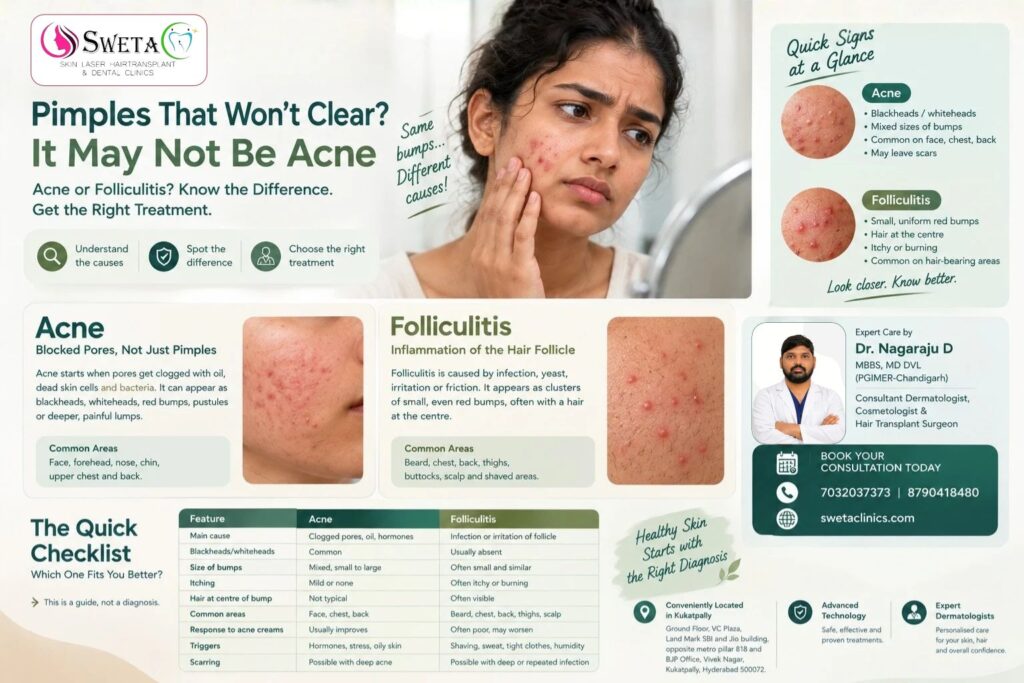
Acne vs Folliculitis: The Core Difference
Both conditions involve your hair follicles. A follicle is the tiny opening in your skin that holds a hair and an oil gland. Problems start when this opening gets blocked, irritated, or infected.
Acne begins with clogged pores. Extra oil and dead skin cells block the follicle. Bacteria that live on the skin then multiply inside the blocked pore. The result is blackheads, whiteheads, pimples, and sometimes deeper lumps.
Folliculitis is inflammation of the follicle itself. It’s usually caused by an infection or irritation. Bacteria, yeast, friction, or shaving can all trigger it. The bumps often look like small, even, red pimples with a hair at the centre.
So acne is mainly a blocked-pore problem. Folliculitis is mainly a follicle-inflammation problem. They can look alike, but they start in different ways.
What Acne Looks Like
Acne comes in several forms. Most people have a mix.
Blackheads are open clogged pores. The top looks dark. It isn’t dirt. The colour comes from the pore’s contents reacting to air.
Whiteheads are closed clogged pores. They look like small, flesh-coloured or white bumps.
Papules are small, red, tender bumps without a visible head.
Pustules are red bumps with a white or yellow tip. This is what most people call a pimple.
Nodules and cysts are deep, painful lumps. They sit under the skin and may leave scars.
Acne usually appears where oil glands are most active. That means the face, forehead, nose, chin, upper chest, and upper back. It’s most common in teens and young adults. Adults in their 20s, 30s, and beyond can get it too.
The key sign is the mix. Acne often shows blackheads or whiteheads along with red bumps. Bumps vary in size. Some are small, and some are large and painful.
What Folliculitis Looks Like
Folliculitis usually shows up as clusters of small bumps. Each bump sits around a hair. You may see a tiny hair in the middle of a red bump or pustule.
The bumps tend to look similar to each other. They are often the same size and shape. This even, uniform look is one of the biggest clues.
Folliculitis can cause:
- Itching, sometimes strong
- Tenderness or a burning feeling
- Small pus-filled bumps that may crust over
- Redness around each bump
- Bumps on areas with hair, such as the beard, chest, back, thighs, buttocks, and scalp
Unlike acne, folliculitis usually has no blackheads or whiteheads. It can appear on skin that’s rarely oily, such as the arms and legs.
The Quick Checklist: Which One Fits You Better?
Use this table as a starting point. It’s a guide, not a diagnosis.
| Feature | Acne | Folliculitis |
| Main cause | Clogged pores, oil, hormones | Infection or irritation of the follicle |
| Blackheads/whiteheads | Common | Usually absent |
| Size of bumps | Mixed, small to large | Often small and similar in size |
| Itching | Mild or none | Often itchy or burning |
| Hair at centre of bump | Not typical | Often visible |
| Common areas | Face, upper chest, upper back | Beard, chest, back, thighs, scalp, shaved areas |
| Response to acne creams | Usually improves | Often poor, may worsen |
| Triggers | Hormones, stress, oily skin | Shaving, sweat, tight clothes, humid weather |
| Scarring | Possible with deep acne | Possible with deep or repeated infection |
If your skin matches the right-hand column, get it checked. Don’t keep trying more acne products.
The Main Types of Folliculitis
Folliculitis isn’t one single condition. The cause decides the treatment.
Bacterial folliculitis
This is the most common type. Bacteria, often Staphylococcus, enter the follicle through tiny breaks in the skin. It causes red, pus-filled bumps. They can be tender or itchy.
Fungal folliculitis
This type is caused by yeast that normally lives on the skin. When it overgrows, it infects the follicles. It’s often called “fungal acne”, though it isn’t true acne. The bumps are small, uniform, and very itchy. They commonly appear on the forehead, chest, back, and shoulders.
Hot, humid weather and heavy sweating favour yeast growth. That makes it a common problem in Hyderabad. Tight clothing, gym wear that stays damp, and oily skin products can add to the risk.
Razor bumps (pseudofolliculitis)
This happens when shaved hair curls back and grows into the skin. The body reacts as if the hair were a foreign object. Red, sore bumps appear on the beard area, neck, or bikini line. It’s common in men who shave closely, especially those with curly hair.
Hot tub or water-related folliculitis
Poorly maintained pools and hot tubs can carry bacteria. These can cause an itchy rash a day or two after swimming. It usually settles on its own but should be checked if it persists.
Deeper forms
Sometimes the infection goes deeper. Boils (furuncles) and carbuncles are larger, painful, pus-filled lumps. They need prompt medical care.
Why Fungal Folliculitis Is Often Mistaken for Acne
Fungal folliculitis is the biggest source of confusion. It looks like acne on the chest, back, and forehead. People treat it with acne products for months.
The problem is that acne treatments don’t target yeast. Some can feed it. Antibiotic tablets and creams kill bacteria. That can let yeast overgrow even more. This is why some patients see their “acne” get worse after antibiotics.
Clues that point toward fungal folliculitis:
- The bumps are very itchy.
- They are all about the same size.
- There are no blackheads.
- The skin gets worse in hot, humid weather or after sweating.
- Acne treatments haven’t helped, or have made things worse.
- You’ve recently taken antibiotics or steroids.
Only a doctor can confirm this. A simple skin test can sometimes help. In many cases, the pattern and your history are enough.
What Triggers Each Condition
Acne triggers
Hormones. Changes during puberty, periods, pregnancy, and conditions such as PCOS can increase oil production.
Genetics. If your parents had acne, you’re more likely to get it.
Stress and sleep. These may not cause acne, but they can make it worse.
Skincare and makeup. Heavy, oily, or pore-clogging products can trigger breakouts.
Diet. The link is still debated. Some people notice flare-ups with high-sugar foods or certain dairy products.
Medicines. Some steroids and other drugs can cause acne-like breakouts.
Folliculitis triggers
Shaving, waxing, and threading. Small cuts and ingrown hairs let germs in.
Sweat and humidity. Warm, damp skin is a good home for bacteria and yeast.
Tight or synthetic clothing. Friction and trapped sweat irritate follicles.
Oily creams and oils. Heavy products can block follicles and feed yeast.
Antibiotic or steroid use. These can upset the skin’s natural balance.
Weak immunity or diabetes. These conditions raise the risk of repeated skin infections.
Shared razors, towels, or gym equipment. These can spread germs.
Why the Wrong Treatment Makes It Worse
Using acne products on folliculitis is a common mistake. Here’s what can go wrong.
Antibiotic creams or tablets used without advice. They won’t help fungal folliculitis. They may encourage yeast to grow.
Steroid creams. Many over-the-counter “pimple and rash” creams contain steroids. They can calm redness briefly. But they can also feed fungal and bacterial infections and thin the skin.
Harsh scrubs and strong acids. These irritate the follicle and spread germs.
Squeezing and picking. This pushes bacteria deeper. It can cause scars and dark marks.
Home remedies. Lemon, toothpaste, and raw garlic can burn the skin and leave dark patches.
The safest step is to find out what you really have. The right diagnosis saves time, money, and skin.
How Acne Is Treated
Acne treatment depends on how severe it is.
Mild acne often responds to a gentle cleanser and a topical medicine. Ingredients such as benzoyl peroxide, salicylic acid, or retinoids are common choices. Your doctor will pick what suits your skin.
Moderate acne may need a combination. This could include a retinoid, a topical antibiotic, and sometimes oral medicines for a limited time.
Severe or scarring acne needs medical care. Doctors may use stronger oral treatments, especially for deep nodules and cysts. Hormonal treatment helps some women.
Procedures such as chemical peels can help with stubborn acne and marks. Treatments for scars are planned after the acne is under control.
Acne takes time to improve. Most treatments need several weeks to show results. Stopping too early is a common reason for relapse.
How Folliculitis Is Treated
Treatment depends on the cause.
Bacterial folliculitis. Mild cases may improve with an antibacterial wash and a topical antibiotic. Widespread or deep cases may need antibiotic tablets.
Fungal folliculitis. This needs antifungal treatment. Doctors often use medicated washes or creams. Stubborn cases may need antifungal tablets. Relapse is common, so maintenance is often advised.
Razor bumps. The first step is to stop or change shaving. Your doctor may suggest a gentler technique, a different hair removal method, or a mild medicated cream. Laser hair reduction is an option for chronic cases.
Deep infections. Boils may need drainage and antibiotics. Don’t try to burst them at home.
In every case, you should also fix the trigger. Wear breathable clothes, change out of sweaty gear quickly, and keep razors personal.
Daily Habits That Help
Small habits protect your skin.
Shower soon after sweating. Don’t sit in damp gym clothes.
Wear loose, cotton clothing. This lets skin breathe in humid weather.
Use clean towels. Wash them often and don’t share them.
Shave with care. Use a sharp, clean razor. Shave in the direction of hair growth. Avoid very close shaving.
Keep skincare simple. Choose light, non-oily products. Add new ones one at a time.
Don’t pick or squeeze. Let a doctor handle stubborn bumps.
Wash your pillow covers and clothes regularly. Dirty fabric can hold germs and oil.
Common Myths About Pimples and Bumps
Myth: All pimples are acne. Many bumps look like pimples but have other causes, including folliculitis.
Myth: Dirty skin causes acne. Acne isn’t caused by poor hygiene. Over-washing can irritate the skin.
Myth: More antibiotics mean faster healing. Antibiotics don’t help fungal folliculitis and can worsen it.
Myth: Folliculitis is always contagious. Some forms can spread through shared razors or towels. Many are triggered by your own skin conditions and aren’t passed on easily.
Myth: A strong cream will clear it fast. Strong products often irritate the skin. A steady plan works better.
When Should You See a Dermatologist?
Book a visit if any of these apply:
- Bumps have lasted more than four to six weeks.
- Acne products have not helped, or made things worse.
- The bumps are itchy, painful, or spreading.
- You have fever, swelling, or large pus-filled lumps.
- You get repeated breakouts after shaving.
- You have diabetes or take medicines that weaken immunity.
- Marks and scars are starting to appear.
Early care helps prevent scarring. A correct diagnosis also saves months of trial and error.
Getting the Right Diagnosis at Sweta Clinics
At Sweta Clinics in Kukatpally, we examine your skin before suggesting any treatment. We look at the pattern, the type of bumps, and your history. We don’t guess based on photos or symptoms alone.
Dr. Nagaraju D (MBBS, MD DVL, PGIMER) leads the evaluation. He has over 10 years of experience telling acne apart from folliculitis and other look-alike conditions. Your plan is then built around your skin type, lifestyle, and goals.
Sweta Clinics is a multi-specialty skin, hair, laser, and dental centre. It’s easily reached from KPHB, Miyapur, Nizampet, Pragathi Nagar, Chandanagar, Madhapur, and Hitech City. You can also see real patient results on our Instagram page. Our YouTube channel shows what treatment looks like before you book.
Frequently Asked Questions
1. What is the main difference between acne and folliculitis?
Acne starts with clogged pores and usually shows blackheads or whiteheads. Folliculitis is inflammation of the hair follicle, often from infection or irritation. Its bumps are usually uniform and may itch.
2. Can I have acne and folliculitis together?
Yes. Some people have both at the same time. A dermatologist can separate them and plan treatment for each.
3. What is fungal acne?
It’s a common name for fungal folliculitis. It isn’t true acne. Yeast infects the follicles and causes small, itchy, uniform bumps. It needs antifungal treatment.
4. Why did my pimples get worse after antibiotics?
Antibiotics kill bacteria, not yeast. In fungal folliculitis, they can let yeast grow more. This is why a proper diagnosis matters.
5. Is folliculitis contagious?
Some types can spread through shared razors, towels, or contaminated water. Many cases come from your own skin and aren’t easily passed to others. Avoid sharing personal items to be safe.
6. Can folliculitis leave scars?
Mild cases usually heal without marks. Deep or repeated infections, and picking, can leave scars or dark spots.
7. Does shaving cause folliculitis?
It can. Close shaving, dull blades, and shaving against hair growth raise the risk. Gentle technique and clean razors help.
8. How long does treatment take?
Mild cases may improve within a couple of weeks. Acne and fungal folliculitis often take longer. Your response depends on severity and how closely you follow the plan.
9. Can folliculitis come back?
Yes. Fungal and recurring bacterial folliculitis can return. Maintenance care and fixing triggers lower the chance.
10. Where can I get this diagnosed in Kukatpally?
Sweta Clinics offers dermatologist-led diagnosis and treatment for acne, folliculitis, and other skin concerns. We serve patients across KPHB, Miyapur, Nizampet, and nearby areas.
Stop Guessing With the Next Pimple Cream
If your “acne” isn’t responding, it may not be acne. Treating the wrong condition only delays healing. The right plan starts with a proper look at your skin.
A short visit can save you months of trial and error. Get your bumps checked and start treatment that actually fits.
📞 Call us: 7032037373 / 8790418480
🌐 Visit: swetaclinics.com
📍 Location: Ground Floor, VC Plaza, SBI and Jio building, opposite metro pillar 818 and BJP Office, Vivek Nagar, Kukatpally, HYD, 500072